EXATEC Presidents Summit 2026 — A Reflection
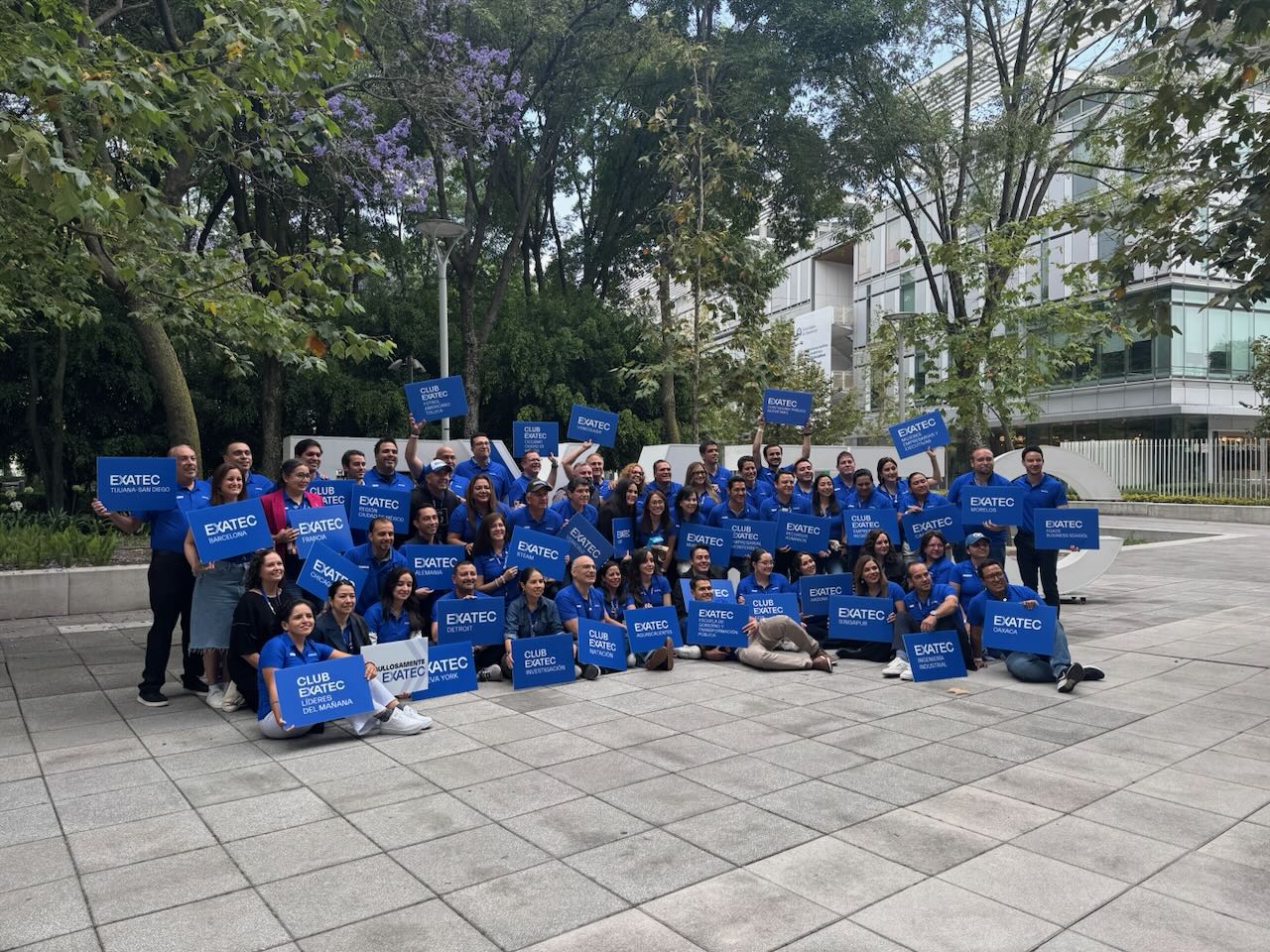
Last updated 13 April 2026In April 2026, I attended the Reunion de Presidencias EXATEC in Campus Ciudad de México as President of EXATEC Australia for the 2026-2027 term. Seventy out of eighty-six chapter presidents from around the world were in the room. Some leading communities of thousands. Some, like ours, still finding their feet. But all of us there for the same reason — to figure out how to make EXATEC mean something real for the people we represent.
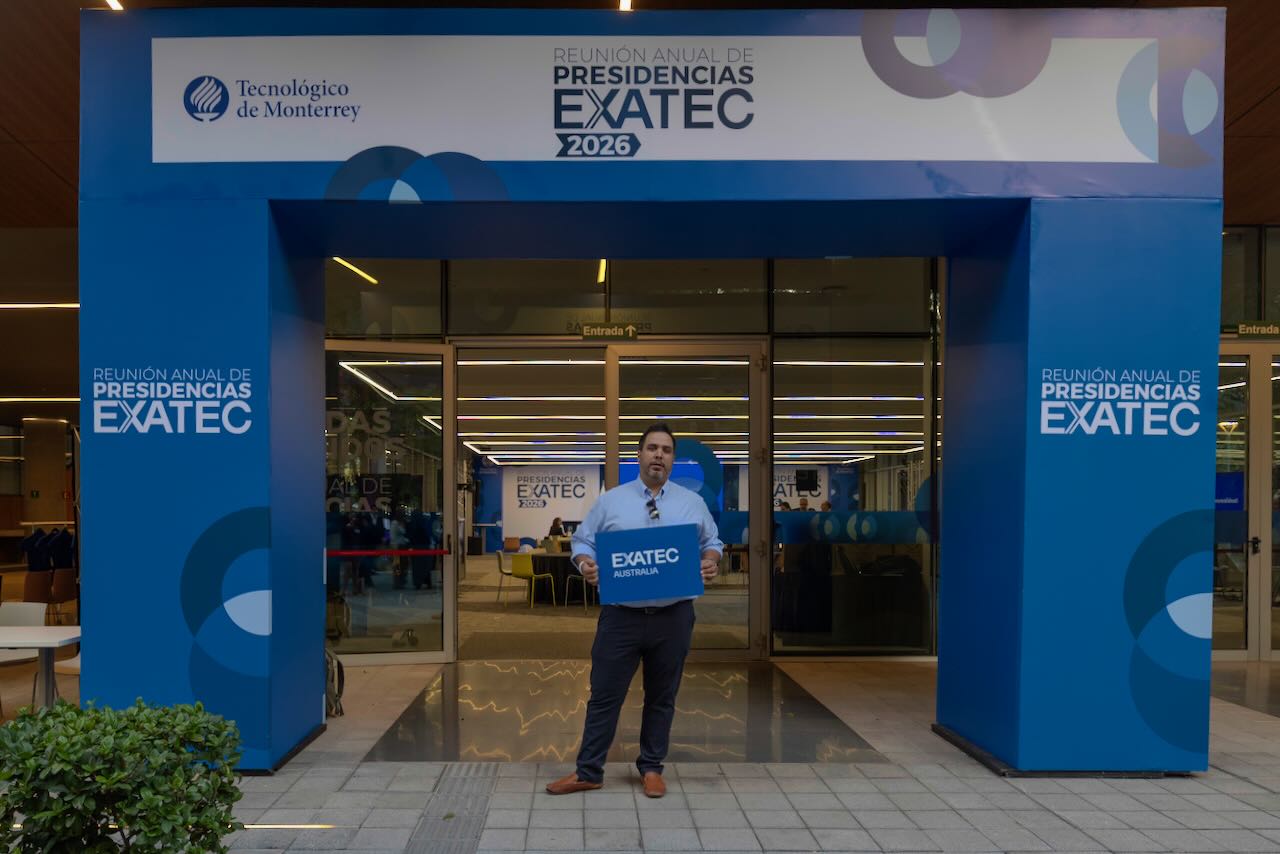
This is what I took away from that experience.
Seeing EXATEC beyond Australia
One of the most valuable things about being in that room was stepping outside the bubble of EXATEC Australia and getting a real sense of what EXATEC looks like globally.
The numbers set the stage early. The EXATEC community is roughly 480,000 alumni. 7 out of 10 hold a postgraduate degree. 14% live outside Mexico. Pride in having studied at Tec sits at 92. Satisfaction at 90. Recommendation at 91. But vinculación — the actual sense of belonging and connection to the community — scores 55.
Dig a little deeper and the picture gets sharper. 86% feel pride in being EXATEC, but only 17% feel they are actually part of a community of Tec alumni. Only 2 out of 10 feel strongly connected. And yet 83% say they want to connect more — they just do not know how, or have not had access.
For every person who is currently connected to the EXATEC network, there are five who want to be but have not found a way in.
That gap is not about apathy. It is about infrastructure. People love where they studied. They just do not feel connected to each other after they leave. And that is exactly the problem chapters like ours exist to solve.
What also became clear is that vinculación is not one-size-fits-all. It shifts with life stage. Alumni in their twenties are exploring — they want benefits, services, career orientation. In their thirties and forties, they want connection — events, networking with purpose, community. In their fifties, trascendencia — mentoring, teaching, contributing to innovation. And beyond sixty, legado — scholarships, donations, structural commitment. The need to belong does not disappear. It evolves.
There is a clear difference in how national chapters and international chapters operate. Both serve a geographic community, but national chapters have direct access to Tec infrastructure — campuses, institutional support, existing ecosystems. International chapters do not. We build from scratch, with fewer resources and less proximity, navigating scale, diversity, and long-term impact in a very different way. Seeing that contrast firsthand helped reframe what is possible for us.
It was not just about inspiration — it was about perspective. Understanding how the central EXATEC team supports chapters around the world made it clear that there is a broader system at play. One that is actively trying to close that vinculación gap — helping communities not just exist, but thrive.
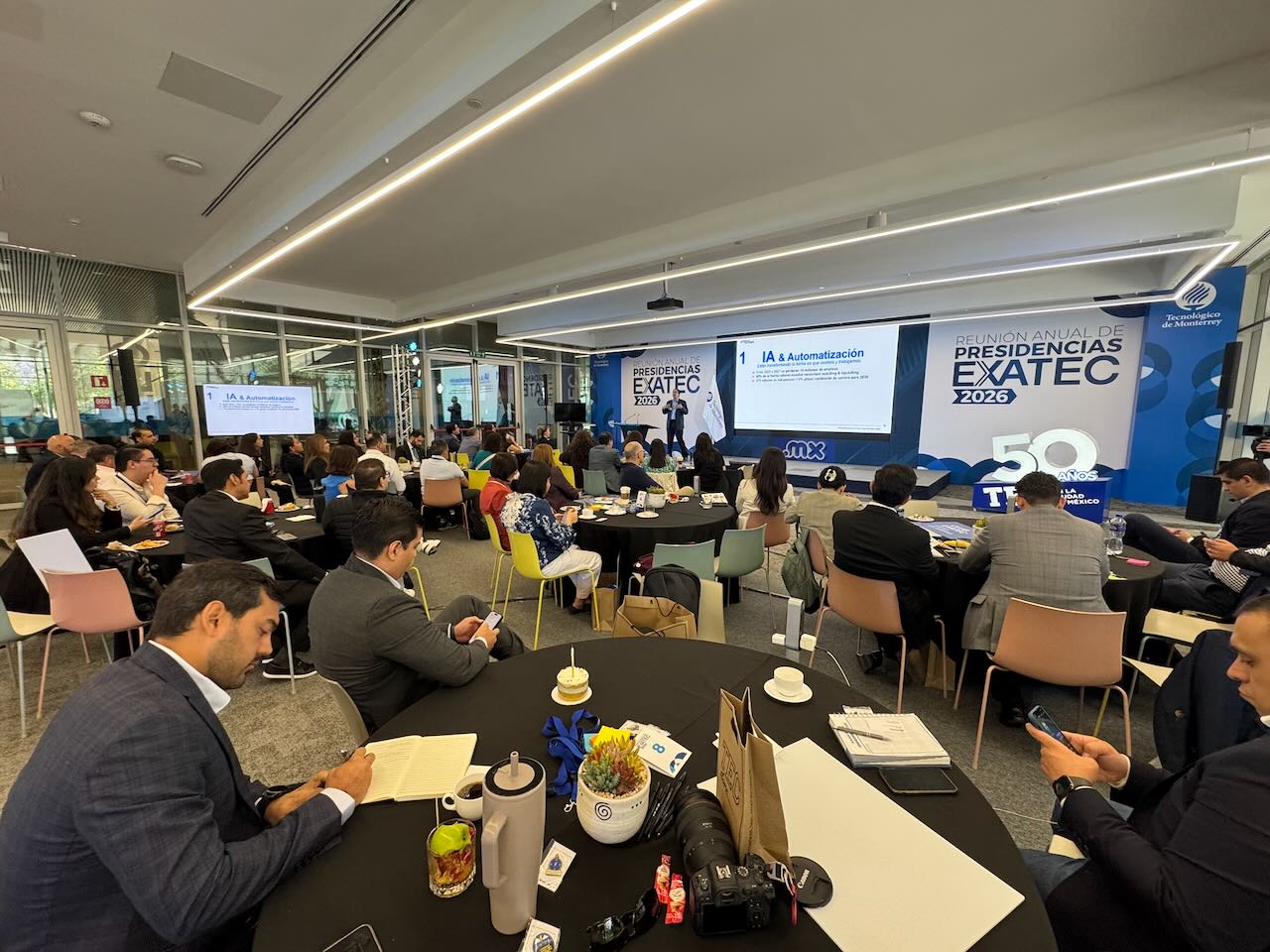
Another standout moment was the session on AI led by Patricia Murrieta. It was not hype-driven. It was a grounded, structured look at what responsible AI leadership actually requires.
She framed it around four pillars: understanding the real impact on people — not just efficiency gains; rethinking organisational design before deploying technology; investing in talent transition so people are not left behind; and governing with clear accountability, not just enthusiasm.
One slide in particular stuck with me: the "CEO Checklist" — five questions to answer before approving any AI project. Where is the human pain? What organisational redesign is needed? Which roles will change and are those people ready? What hidden debt are we taking on? And what are the alarm metrics that tell us to stop? If you cannot answer those, the organisation is not ready to deploy.
It was the kind of session that reframes how you think, not just what you know. And it landed differently in a room full of community leaders — because these are exactly the questions we should be asking about how we organise ourselves, not just how companies adopt technology.
That combination — global perspective and future-facing thinking — is where things started to click.
Ideas worth stealing (and one we brought to the table)
One of the most interesting discussions came from the international working group. The challenges are different when your community is spread across countries, but so are the opportunities.
A standout idea was using EXATEC talent abroad to connect back into the Tec ecosystem in a more intentional way. Think of it as a lifecycle:
PrepaTec → Tec → Global EXATEC → Back to inspire
Alumni overseas engaging with PrepaTec students, deans, and programs to share real-world perspectives. Inspiring students to continue within Tec, while also building an early sense of belonging beyond Mexico.
Then, when those students eventually move abroad, they are not starting from zero. They already see EXATEC as a global network they are part of.
At the same time, it gives professionals overseas a platform to showcase their expertise back home, closing the loop between local and global. This is not something any single chapter can launch on its own — it needs to be validated and incorporated into Tec de Monterrey's own processes before it becomes real. But the fact that it was discussed seriously, with buy-in from multiple international chapters, is a step forward.
Beyond the lifecycle idea, several chapters presented practices that gave us concrete things to think about:
EXATEC DC built strategic alliances with the Mexican Embassy and the Inter-American Development Bank to create mentorship programs and job opportunities. We have started exploring institutional partnerships in Australia, but had not considered the embassy as a collaborator. That is now on the table.
EXATEC Madrid formed a "Club de Universidades" — a coalition of alumni associations from Tec, ITAM, IBERO, and Anahuac, working together to position the Mexican academic community in Spain.
EXATEC Francia runs monthly afterworks as a ritual, not an event. Fixed cadence, simple format, organic expansion to new cities. We are already doing something similar, which was validating to see reflected in a more mature chapter.
EXATEC Profesionistas identified a real gap — high-income professionals with no structured wealth planning — and built a digital-to-presential pipeline around it. They hit 1,400 registrations, a record. An ongoing series on something like Australian wealth management for expats would be incredible, though figuring out the right format and who leads it is an open question.
One thing that came through clearly is that Lideres del Manana — Tec's scholarship program — is a challenge for international chapters to integrate into their activities. Francia and Londres seem like the best candidates to learn from on this front, and it is something we want to bring into EXATEC Australia's roadmap.
Sharing what we have been building
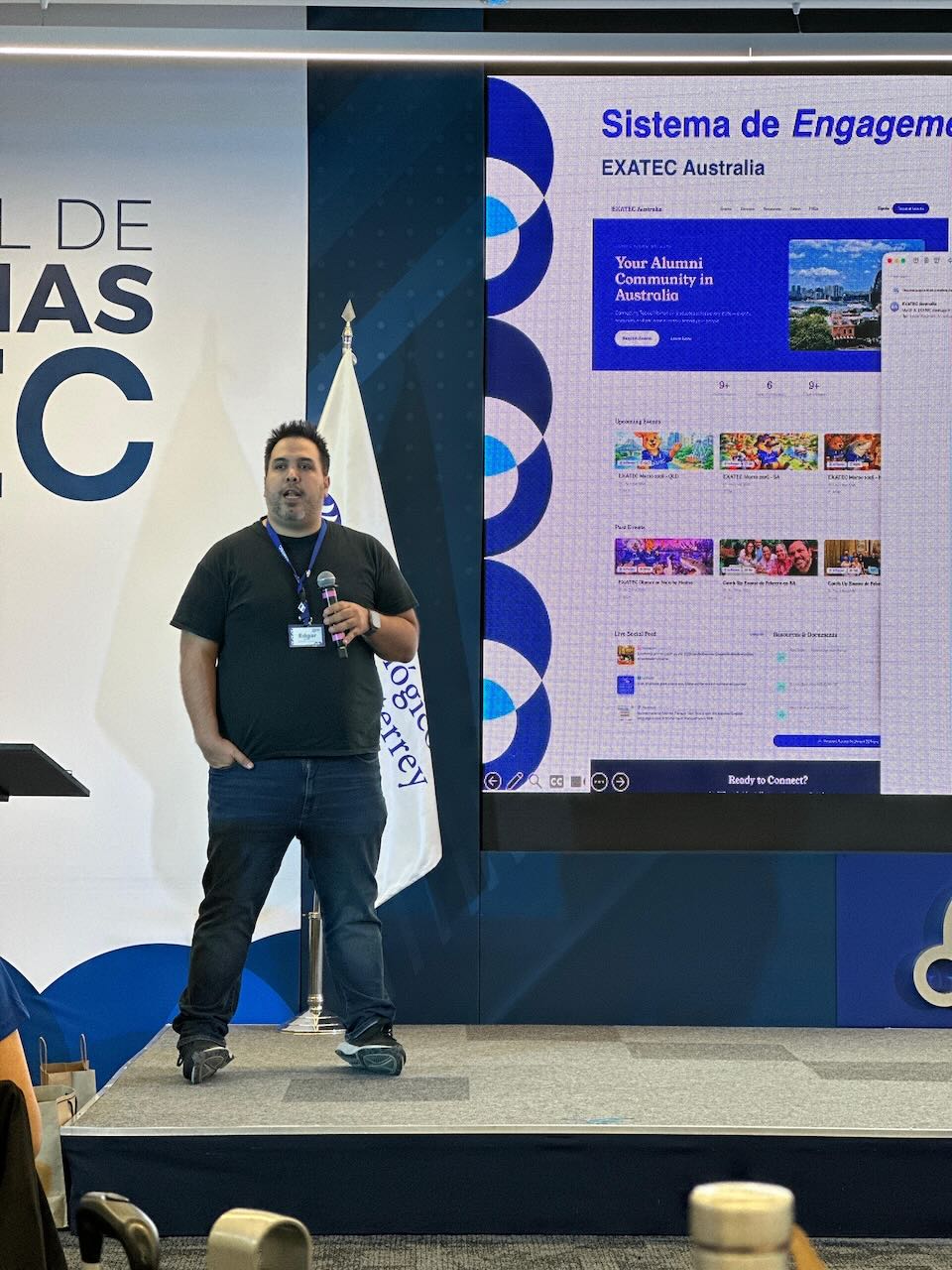
We had the opportunity to present a mejor practica alongside much more established chapters — some with years of track record and thousands of members. We have been operating since late January 2026. Less than three months. And there we were, on the same stage, sharing what we had built.
Our topic: the Sistema de Engagement Operacional — the idea that engagement should be a repeatable system, not a series of one-off volunteer efforts.
The model is built around a cycle: interaction, capture, amplification, repetition. Monthly events create the rhythm. A centralised platform — exatecaustralia.com — acts as the community's memory. And the newsletter amplifies what happens back to the community, creating visibility between events and driving people to the platform.
The response was encouraging. Several chapter leaders expressed interest in implementing something similar. Tec de Monterrey indicated they would be keen to vet it, which could mean making the approach official — a significant step. There is also a potential cross-collaboration with EXATEC Alemania, a chapter that appears to be building with a similar level of rigour and quality.
Our goal is to make this open source. Not just the code, but the approach — helping other associations standardise the way things work within the EXATEC ecosystem. We are a young chapter, but the work we are doing on clarity, documentation, and shared infrastructure is already something others found worth paying attention to.
What stays with me
The summit reinforced something I have been thinking about for a while: the best communities are not built on enthusiasm alone. They are built on systems, clarity, and a willingness to think beyond your own context.
But more than that, international collaboration now feels genuinely within reach. Before this summit, cross-chapter work felt like a nice idea. Now it feels like something that is actually going to happen — integration of international networks, faster growth of our alumni portal, and real opportunities to learn from each other.
What this means for members is concrete: the ability to learn from international experts across the EXATEC network, to connect with distinguished expat alumni in other countries, and to access their skills and stories. The network is becoming more than a directory. It is becoming a platform.
Pride at 92, vinculación at 55. That gap is not a failure — it is a mandate. It is the reason chapters exist, and it is the reason the work we are doing matters.
EXATEC Australia is still early. But after this summit, I am more convinced than ever that what we are building — a transparent, well-documented, globally connected chapter — is not just the right approach for us. It might be a model worth sharing.
Edgar Anzaldua - Presidente EXATEC Australia 2026-2027
EXATEC Presidents Summit 2026 — A Reflection
Last updated 13 April 2026In April 2026, I attended the Reunion de Presidencias EXATEC in Campus Ciudad de México as President of EXATEC Australia for the 2026-2027 term. Seventy out of eighty-six chapter presidents from around the world were in the room. Some leading communities of thousands. Some, like ours, still finding their feet. But all of us there for the same reason — to figure out how to make EXATEC mean something real for the people we represent.
This is what I took away from that experience.
Seeing EXATEC beyond Australia
One of the most valuable things about being in that room was stepping outside the bubble of EXATEC Australia and getting a real sense of what EXATEC looks like globally.
The numbers set the stage early. The EXATEC community is roughly 480,000 alumni. 7 out of 10 hold a postgraduate degree. 14% live outside Mexico. Pride in having studied at Tec sits at 92. Satisfaction at 90. Recommendation at 91. But vinculación — the actual sense of belonging and connection to the community — scores 55.
Dig a little deeper and the picture gets sharper. 86% feel pride in being EXATEC, but only 17% feel they are actually part of a community of Tec alumni. Only 2 out of 10 feel strongly connected. And yet 83% say they want to connect more — they just do not know how, or have not had access.
For every person who is currently connected to the EXATEC network, there are five who want to be but have not found a way in.
That gap is not about apathy. It is about infrastructure. People love where they studied. They just do not feel connected to each other after they leave. And that is exactly the problem chapters like ours exist to solve.
What also became clear is that vinculación is not one-size-fits-all. It shifts with life stage. Alumni in their twenties are exploring — they want benefits, services, career orientation. In their thirties and forties, they want connection — events, networking with purpose, community. In their fifties, trascendencia — mentoring, teaching, contributing to innovation. And beyond sixty, legado — scholarships, donations, structural commitment. The need to belong does not disappear. It evolves.
There is a clear difference in how national chapters and international chapters operate. Both serve a geographic community, but national chapters have direct access to Tec infrastructure — campuses, institutional support, existing ecosystems. International chapters do not. We build from scratch, with fewer resources and less proximity, navigating scale, diversity, and long-term impact in a very different way. Seeing that contrast firsthand helped reframe what is possible for us.
It was not just about inspiration — it was about perspective. Understanding how the central EXATEC team supports chapters around the world made it clear that there is a broader system at play. One that is actively trying to close that vinculación gap — helping communities not just exist, but thrive.
Another standout moment was the session on AI led by Patricia Murrieta. It was not hype-driven. It was a grounded, structured look at what responsible AI leadership actually requires.
She framed it around four pillars: understanding the real impact on people — not just efficiency gains; rethinking organisational design before deploying technology; investing in talent transition so people are not left behind; and governing with clear accountability, not just enthusiasm.
One slide in particular stuck with me: the "CEO Checklist" — five questions to answer before approving any AI project. Where is the human pain? What organisational redesign is needed? Which roles will change and are those people ready? What hidden debt are we taking on? And what are the alarm metrics that tell us to stop? If you cannot answer those, the organisation is not ready to deploy.
It was the kind of session that reframes how you think, not just what you know. And it landed differently in a room full of community leaders — because these are exactly the questions we should be asking about how we organise ourselves, not just how companies adopt technology.
That combination — global perspective and future-facing thinking — is where things started to click.
Ideas worth stealing (and one we brought to the table)
One of the most interesting discussions came from the international working group. The challenges are different when your community is spread across countries, but so are the opportunities.
A standout idea was using EXATEC talent abroad to connect back into the Tec ecosystem in a more intentional way. Think of it as a lifecycle:
PrepaTec → Tec → Global EXATEC → Back to inspire
Alumni overseas engaging with PrepaTec students, deans, and programs to share real-world perspectives. Inspiring students to continue within Tec, while also building an early sense of belonging beyond Mexico.
Then, when those students eventually move abroad, they are not starting from zero. They already see EXATEC as a global network they are part of.
At the same time, it gives professionals overseas a platform to showcase their expertise back home, closing the loop between local and global. This is not something any single chapter can launch on its own — it needs to be validated and incorporated into Tec de Monterrey's own processes before it becomes real. But the fact that it was discussed seriously, with buy-in from multiple international chapters, is a step forward.
Beyond the lifecycle idea, several chapters presented practices that gave us concrete things to think about:
EXATEC DC built strategic alliances with the Mexican Embassy and the Inter-American Development Bank to create mentorship programs and job opportunities. We have started exploring institutional partnerships in Australia, but had not considered the embassy as a collaborator. That is now on the table.
EXATEC Madrid formed a "Club de Universidades" — a coalition of alumni associations from Tec, ITAM, IBERO, and Anahuac, working together to position the Mexican academic community in Spain.
EXATEC Francia runs monthly afterworks as a ritual, not an event. Fixed cadence, simple format, organic expansion to new cities. We are already doing something similar, which was validating to see reflected in a more mature chapter.
EXATEC Profesionistas identified a real gap — high-income professionals with no structured wealth planning — and built a digital-to-presential pipeline around it. They hit 1,400 registrations, a record. An ongoing series on something like Australian wealth management for expats would be incredible, though figuring out the right format and who leads it is an open question.
One thing that came through clearly is that Lideres del Manana — Tec's scholarship program — is a challenge for international chapters to integrate into their activities. Francia and Londres seem like the best candidates to learn from on this front, and it is something we want to bring into EXATEC Australia's roadmap.
Sharing what we have been building
We had the opportunity to present a mejor practica alongside much more established chapters — some with years of track record and thousands of members. We have been operating since late January 2026. Less than three months. And there we were, on the same stage, sharing what we had built.
Our topic: the Sistema de Engagement Operacional — the idea that engagement should be a repeatable system, not a series of one-off volunteer efforts.
The model is built around a cycle: interaction, capture, amplification, repetition. Monthly events create the rhythm. A centralised platform — exatecaustralia.com — acts as the community's memory. And the newsletter amplifies what happens back to the community, creating visibility between events and driving people to the platform.
The response was encouraging. Several chapter leaders expressed interest in implementing something similar. Tec de Monterrey indicated they would be keen to vet it, which could mean making the approach official — a significant step. There is also a potential cross-collaboration with EXATEC Alemania, a chapter that appears to be building with a similar level of rigour and quality.
Our goal is to make this open source. Not just the code, but the approach — helping other associations standardise the way things work within the EXATEC ecosystem. We are a young chapter, but the work we are doing on clarity, documentation, and shared infrastructure is already something others found worth paying attention to.
What stays with me
The summit reinforced something I have been thinking about for a while: the best communities are not built on enthusiasm alone. They are built on systems, clarity, and a willingness to think beyond your own context.
But more than that, international collaboration now feels genuinely within reach. Before this summit, cross-chapter work felt like a nice idea. Now it feels like something that is actually going to happen — integration of international networks, faster growth of our alumni portal, and real opportunities to learn from each other.
What this means for members is concrete: the ability to learn from international experts across the EXATEC network, to connect with distinguished expat alumni in other countries, and to access their skills and stories. The network is becoming more than a directory. It is becoming a platform.
Pride at 92, vinculación at 55. That gap is not a failure — it is a mandate. It is the reason chapters exist, and it is the reason the work we are doing matters.
EXATEC Australia is still early. But after this summit, I am more convinced than ever that what we are building — a transparent, well-documented, globally connected chapter — is not just the right approach for us. It might be a model worth sharing.
Edgar Anzaldua - Presidente EXATEC Australia 2026-2027